Slaughterville, Oklahoma
Tree Service in Slaughterville, OK
Big parcels, big trees, no problem.
Tree service in Slaughterville, OK is acreage tree work east and south of Noble: hedgerow removals, storm cleanup, and stump grinding behind the farthest gate on the place.
Room to work, roads to find
Slaughterville is not a town square, it is a town of open country: big rural parcels strung along section-line roads. Despite how it sounds, the name honors Jim Slaughter, who once ran a store there. Out here the work changes shape. There is room to fell trees whole instead of rigging them piece by piece, which saves money, and the hard part is often just the approach: a long drive, a locked gate, soft ground past the barn. Tell us in the quote form how to find the tree and what the ground is like; that detail helps the local company choose its machines before it drives out.
The Oklahoma Historical Society records that the crossroads town incorporated in 1970 to head off feared annexation by Norman, Noble and Lexington. The Census Bureau counted 4,163 residents there in 2020.
Fence lines and hedgerows
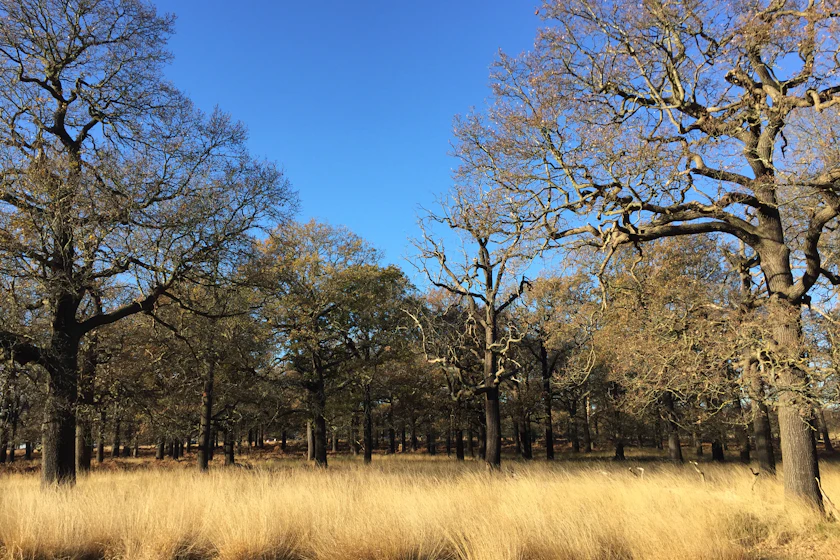
Every unmowed fence in Cleveland County grows its own forest: hackberry and Siberian elm seeded by birds on the wire, redcedar filling the gaps, all of it eventually growing through the fence it started beside. Getting a fence line back means removing the trees without wrecking the wire, then grinding the stumps low enough to stretch new fence straight over them. It is methodical, satisfying work, and it quotes best by the fence run: walk it with whoever comes out to price it, or send photos and the length. The same fence-row work runs across the river to the west, where tree removal around Blanchard is mostly hedgerows and outbuildings.
The same logic applies around outbuildings. A redcedar against a barn wall is stored fire waiting on a spark, an elm over a shop roof is a slow leak with a schedule, and both are cheap, simple removals while the weather is calm. Out here they can usually be felled whole into open ground, which is the least expensive kind of tree work there is.
Storm cleanup on big parcels
Acreage storm damage is a different economy than town damage. Nothing may be on a structure, but a big cottonwood down across a drive or a pond dam is still a right-now problem for the people who live behind it. On big parcels the haul can come out of the bill: logs bucked to firewood length and stacked, chips blown into a pile you will use for years, only the awkward wood actually leaving on the trailer. The storm page has the safety rules that matter most out here, where the nearest crew after ice is often the owner and a chainsaw — the short version is: bent limbs are loaded springs, and lines come before everything. When the sky looks wrong, the NWS office in Norman is the source worth trusting.
There is a sober number behind that warning. OSU Extension’s EPP-7323, a fact sheet on trees hurt by storms, reports more than 50 deaths nationwide each year among professionals removing or pruning trees, people who do it for a living. And where OG&E is the power company, its vegetation guidelines say that after a storm the company moves tree debris to the curb but leaves disposal to the customer, so ask for the haul-off to be written into the quote.
Slaughterville questions
Is a big Slaughterville parcel too far out for a tree request?
No. Requests from anywhere in Slaughterville are passed to the one independent tree company that takes Norman jobs. Give the section-line road, how the gate opens and what the ground is like near the tree, so the company can plan for the ground before it comes out.
Can the wood from a Slaughterville removal stay on the property?
Usually. Logs can be bucked to firewood length and stacked, and the chips can be left in a pile for paths or beds, which trims the haul-off part of the bill. Say so when you ask for the quote.
Should I cut up a storm-damaged tree on my own land?
Only small wood lying loose on the ground. Bent limbs store energy and can spring when cut, and OSU Extension counts more than 50 deaths a year nationwide among professionals doing this work. Anything hung up, leaning or near a line belongs to the tree company or the utility.
Down a section line? Still yes.
Call or send the form, and describe the gate.