Norman, Oklahoma
Tree Removal in Norman, OK
Tree removal Norman trusts.
Tree removal in Norman, OK for trees that are dead, dying, storm-cracked, or just in the wrong place — taken down clean, quoted straight, and the yard left better than it was found.
When a tree has to go
Nobody calls hoping to lose a shade tree. They call because the tree already made the decision. The usual reasons, most common first: the tree is dead and shedding bark; a storm cracked the trunk or split a main fork; wind on soaked ground heaved the roots; the limbs over the roof have gotten so heavy that the trim which would fix them would leave nothing worth keeping; or a redcedar has grown hard against the house. Several of Norman’s most common yard trees — silver maple, Siberian elm, cottonwood — grow fast and break easy, and for each of them there comes a year when removal is the honest recommendation.
Not sure your tree is done? Ask. Sometimes a real trim buys a good tree another decade, and that is the better job to book. For a second opinion on whether a tree can be saved, the International Society of Arboriculture’s homeowner site, treesaregood.org, is a fair place to start.
A removal, start to finish
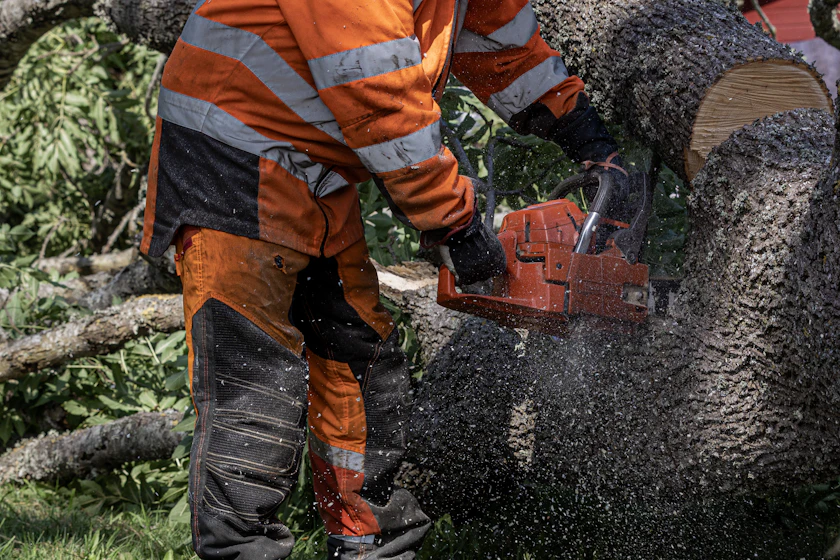
The tree company walks the yard, agrees on a number with you, and picks a day. If there is open ground, the tree comes down in one controlled fell. On most Norman lots there is not — so a climber or the bucket truck works from the top down, and every limb hanging over a target gets roped and lowered, not dropped. Brush goes through the chipper, the trunk gets bucked and loaded, and the lawn gets raked. If you are keeping firewood, it gets cut to length and stacked where you want it. Across the river, Newcastle tree removals and removals out around Blanchard meet open ground more often, and the price follows the ground.
The stump is its own decision: leave it cut low, or have it ground out below ground level the same day. Grinding costs the least when it rides along with the removal. Width, depth, stump count and gate access each move that line, and what drives a stump grinding price in Norman takes them one at a time.
What removal costs in Norman
A typical removal here runs about $750. The realistic range is $200 for a small tree up to $2,000 and beyond for a big one. The hardest jobs — a crane picking a dead oak off a roofline, section by section — can reach $6,000 to $7,000. Emergency work after a storm can run to $5,000, mostly because the wood is wet, loaded and unpredictable, and the tree is often resting on something that matters.
Four things move the number:
- Size. Height, spread, and trunk diameter set the hours.
- Targets. A tree over open lawn goes quickly. Over a roof, a fence, and a service drop, every piece rides a rope.
- Access. Street-side trees meet the bucket truck. A backyard behind a narrow gate gets climbed, and the wood gets carried out.
- Condition. Dead wood is brittle. It gets rigged slower and safer, and that costs time.
The quote is free and the number is in writing. It changes only if the job changes. To guess your own number before anyone walks the yard, see where six common Norman jobs land.
Cranes, tight lots, and dead wood
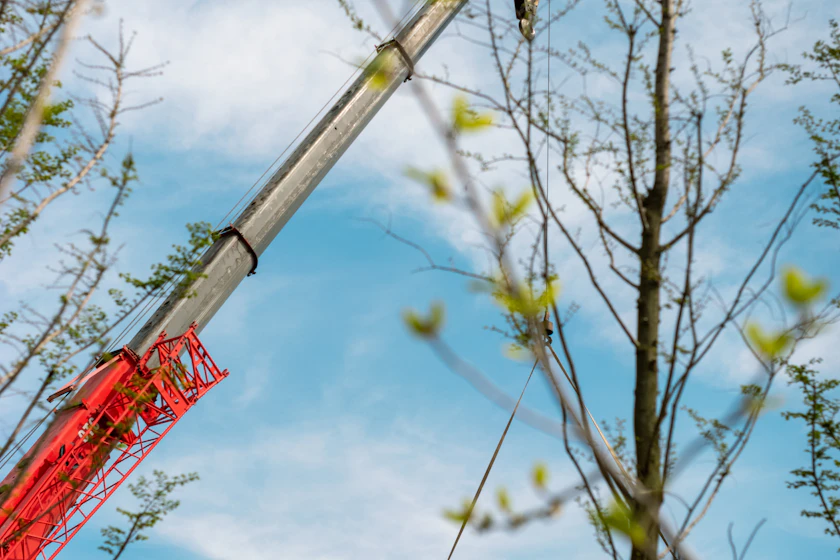
Some trees are past climbing. A hackberry that has stood dead through two Oklahoma summers will not hold a climber’s weight, and no rope makes it safe. That is when a crane earns its fee: the operator holds each section from above while the sawyer cuts it free, and the wood flies over the house instead of through it. The same goes for tight lots where a tree leans over two roofs at once, or storm-damaged trunks that could go any direction the moment they are touched.
A good quote says plainly when a job needs a crane and when it does not. Paying for one you do not need is a waste, and skipping one you do need is how fences, roofs, and people get hurt.
Removal questions
Can you take just part of the tree?
Often, yes. If the trunk is sound and the problem is one bad limb or too much weight on one side, reduction may be the smarter buy, and the quote should say so.
Who gets the wood?
You do, if you want it — bucked to firewood length and stacked. Otherwise it leaves on the trailer along with the chips.
Will my yard survive?
Ground protection goes down where machines roll, sprinkler heads get flagged, and the lawn gets a final rake once the work is done. Ruts and crushed beds are not part of the deal.
How long does a removal take?
Most take a morning to a day. Crane jobs and big dead trees can run longer, and you should hear that before work starts, not after.
Ready when you are.
One walk of the yard, one written number, one clean removal.